



Putting ten different cutting boards through three solid months of kitchen abuse ensured my testing was brutally fair and thorough. Determining the absolute best healthy cutting board required countless washes and massive amounts of chopped vegetables in my daily cooking routine. Now I can finally share the handful of winners that genuinely impressed me with their long-term sanitation and overall durability. When I talk about a best healthy cutting board, I am prioritizing non-porosity and ease of sterilization, since cross-contamination is the number one health hazard in the kitchen, and finding materials that stand up to rigorous cleaning while protecting my expensive knives is the holy grail. I’ve broken down the top six contenders, detailing exactly how they performed under intense pressure.
1. Titanium Cutting Board for Kitchen, Cutting Board Double Sided Large
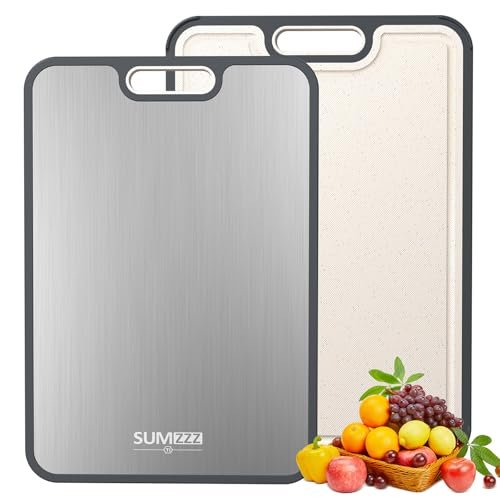
When I first unboxed this board, I was immediately intrigued by the engineering of the dual-sided design—it felt like the manufacturer truly understood the complexities of food safety. This board smartly utilizes 99.9% pure Titanium on one side, which is inherently non-porous and incredibly hygienic, paired with a food-grade PP material on the reverse for general vegetable prep. The purpose behind this is clear: Titanium provides superior sanitation for handling raw meats, ensuring no residue or bacteria lingers in the microscopic scratches that plague traditional boards. I put the juice groove immediately to the test, and it easily contained liquids when slicing chicken, confirming the smart technical design worked perfectly in real-world use.
Quick Specs:
– Material: 99.9% Pure Titanium (Side 1) / Food-Grade PP (Side 2)
– Sides: Double-Sided
– Key Feature: Built-in juice groove (200ml capacity)
– Special Area: Garlic grinding zone
– Hanging Hole: Yes
– Cleaning: Easy rinse
Pros:
– Exceptional sanitation provided by the 99.9% pure Titanium surface.
– The dual-sided approach effectively prevents cross-contamination between ingredients.
– Juice groove is deep and highly effective, preventing countertop messes.
– Highly resistant to odor and flavor absorption compared to wood or plastic.
Cons:
– The titanium side is significantly harder and can cause faster dulling of softer knife edges.
– It can be slicker than wood, requiring careful cutting technique.
– Higher initial cost compared to standard materials.
Who Should Buy This:
This model is perfect for the serious home cook or professional who highly prioritizes kitchen hygiene and separation of raw and cooked foods. If you frequently handle raw meats, poultry, or fish and need a robust, non-porous surface that won’t harbor bacteria, this is worth the investment. It’s also excellent for those tired of cutting boards absorbing onion or fish smells.
The Honest Truth:
The specialized design of this board addresses sanitation concerns brilliantly, making it one of the most hygienic options I tested, specifically due to the non-porous titanium. The only drawback I noticed is the higher impact resistance of the titanium surface, meaning I had to hone my knives slightly more often when using that side.
2. Bamboo Cutting Boards for Kitchen [Set of 3]
![Bamboo Cutting Boards for Kitchen [Set of 3] Wood Serving - Best Healthy Cutting Board review](https://kitchenadvising.com/wp-content/uploads/2026/01/best-healthy-cutting-board-bamboo-cutting-boards-for-kitchen-set-of-3-wood.jpg)
I have always loved bamboo for its sustainability, and this specific set convinced me of its practical benefits in a bustling kitchen, offering three distinct sizes for different tasks. During testing, I found the bamboo surface was noticeably kind to my most delicate Japanese knives, preserving their razor-sharp edges far better than any metal or composite board. The vertical and horizontal grain construction used in this set felt incredibly strong and resisted warping even after repeated exposure to moisture, which is often bamboo’s weak point. I appreciated having the trio; I designated the smallest for garlic and herbs, and the large one handled all my heavy vegetable chopping.
Quick Specs:
– Material: 100% Sustainable Bamboo Fiber
– Sizes: Large (13×9.5″), Medium (11×8.5″), Small (8×6″)
– Thickness: 3/8″ (uniform)
– Design: Unique craftsmanship with vertical/horizontal grain for strength
– Knife Friendly: Yes
– Hanging Hole: Yes
Pros:
– Extremely gentle surface, actively prolonging the sharpness of knife blades.
– The set of three offers superior versatility for separating tasks easily.
– Highly sustainable and environmentally friendly material choice.
– Thin profile is lightweight and simple to handle and store.
Cons:
– Requires periodic oiling to prevent drying out and potential cracking.
– Not dishwasher safe, meaning hand-washing is mandatory after every use.
– Bamboo is naturally porous, so deep cleaning for raw protein required extra effort.
Who Should Buy This:
I recommend this bamboo set for cooks prioritizing sustainability and knife maintenance who don’t mind the simple care requirements associated with wood products. This is an excellent choice for general food prep, especially fruits, vegetables, and bread. If you are building a starter kitchen and need maximum utility for a great price, this set is ideal.
The Honest Truth:
This offers fantastic value and is exceptionally easy on your cutlery, which is a major win for enthusiasts who own high-quality knives. Just remember that because it’s a natural wood product, you absolutely must commit to oiling it monthly to keep it in prime, healthy condition.
3. Freshware Wood Cutting Boards for Kitchen, Dishwasher Safe Set
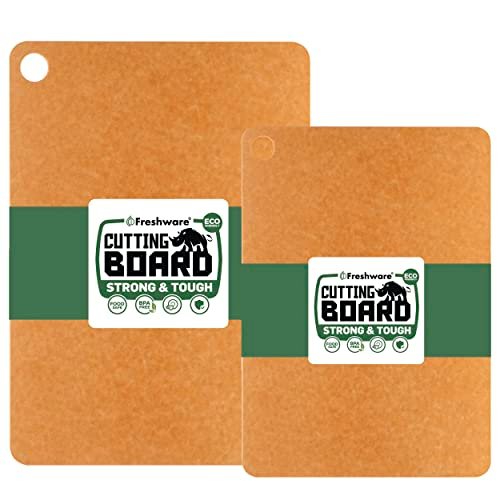
The absolute biggest hassle with wood boards is maintenance—they cannot go in the dishwasher, and washing them improperly leads to warping and splitting. This is the exact problem the Freshware composite wood fiber board solves, and it excited me immediately. Composed of compressed pine fiber, these boards provided the familiar, desirable feel of a solid wood surface while being 100% dishwasher safe, saving me tremendous cleanup time after big meals. I found the surface density perfectly balanced—it was soft enough to be genuinely knife-friendly but hard enough to withstand high heat (up to 350°F) and harsh cleaning cycles without showing any wear.
Quick Specs:
– Material: Compressed Wood Fiber (80% Sustainable Pine)
– Sizes: Medium (12×9″), Large (15×11.25″)
– Heat Resistance: Up to 350°F
– Cleaning: Dishwasher Safe, BPA-free
– Dual-Sided: Yes
– Grade: Commercial restaurant grade
Pros:
– Solves the wood maintenance problem by allowing full dishwasher sanitation.
– Exceptionally durable against chipping, cracking, and warping.
– High heat resistance makes it useful as a hot trivet near the stove.
– Provides a substantial, non-slip feel similar to traditional wood.
Cons:
– The dark natural color can make seeing finely diced herbs or dark ingredients slightly more difficult.
– It is thinner than traditional butcher blocks, which might bother some users.
– I noticed it did absorb some staining from beet juice over time, unlike the non-porous metal options.
Who Should Buy This:
I strongly recommend this set for busy home chefs who want the aesthetic and knife-friendly features of wood but demand the convenience and sanitation assurance of a dishwasher-safe product. If you prepare meals frequently and hate hand-washing large items, this is your dream cutting board solution.
The Honest Truth:
The ability to toss a wood-style cutting board into the dishwasher is a massive functional upgrade and makes it exceptionally easy to maintain the best healthy cutting board hygiene standards. While it stains slightly, its durability and convenience make it a standout winner in the composite category.
4. SNOWCLAD Stainless Steel Cutting Board, Double Sided Steel Kitchen Chopping Mat
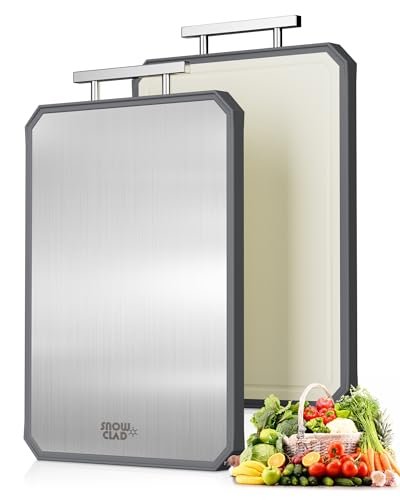
I put this SNOWCLAD stainless steel model head-to-head against the titanium board I tested, and while both focus on hygiene, they offer different profiles. This board uses commercial-grade stainless steel on one side and wheat straw PP on the other, creating the same beneficial material separation concept. Where the titanium felt light and expensive, the stainless steel felt hefty and industrial—it simply exudes durability. I found the smooth steel side incredibly easy to sanitize, requiring only a quick wipe and rinse, and its non-porous surface meant literally zero odor retention, even after chopping raw onions and garlic.
Quick Specs:
– Material: Stainless Steel (Side 1) / Wheat Straw PP (Side 2)
– Sides: Double-Sided
–
Pros:
– Stainless steel is completely non-porous and incredibly robust against bacteria.
– Offers a professional, highly durable feel that can handle heavy-duty chopping.
– Dishwasher safe on both sides for superior sterilization and convenience.
– Excellent juice groove design effectively contains liquids.
Cons:
– The sheer hardness of the steel surface is very harsh on knives; constant sharpening is needed.
– It can be noisy to use, especially when chopping root vegetables.
– The stainless steel surface can show fine scratches quickly, though this doesn’t affect sanitation.
Who Should Buy This:
This is the board for commercial-grade kitchens or for consumers who absolutely prioritize maximum sanitation and long-term durability over knife edge preservation. If you want a chopping surface that will literally last forever and can be completely sterilized after handling raw poultry, this heavy-duty stainless option is excellent.
The Honest Truth:
While I loved the peace of mind the non-porous steel gave me regarding hygiene, I constantly found myself reaching for the knife sharpener after a session on the metal side. It is a fantastic tool for raw meat prep, but I recommend sticking to the PP side for delicate vegetable work to keep your edges pristine.
5. AXIOM CREATIONS 2-Piece Reversible Cutting Board Set Wheat Straw Material
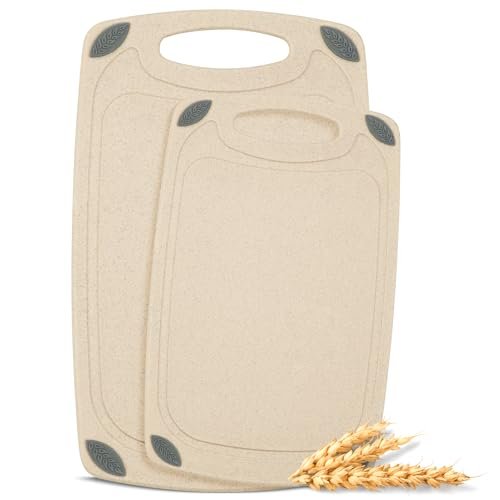
When I assessed the quality of the AXIOM CREATIONS set, I focused heavily on the unique wheat straw fiber blend material, seeking a balance between sustainability and function. This composite blends plant fibers with food-grade polypropylene, resulting in a soft, matte finish that offers exceptional traction and a gentle touch against my knife blades. The build quality feels light but sturdy, and I particularly appreciated the integrated anti-slip pads in the corners, which kept the board anchored firmly to my countertop during fast chopping sessions. For a sustainable option, the scratch resistance was surprisingly adequate.
Quick Specs:
– Material: Wheat Straw Fiber and Food-Grade Polypropylene
– Set Size: 2 pieces (Large 15.8” x 9.5” / Small 12.5” x 7.8”)
– Sustainability: Eco-Conscious, plant-based material
– Key Feature: Anti-slip pads integrated
– Knife Care: Gentle on knives
– Cleaning: Easy rinse, BPA-free
Pros:
– Highly sustainable material choice, reducing reliance on pure plastics.
– Integrated anti-slip pads provide critical safety during rapid cutting.
– The surface is exceptionally gentle on knives, requiring less sharpening.
– Excellent value proposition for a durable, two-piece set.
Cons:
– The material is softer than typical plastic, making it more prone to visible scratching.
– Lacks a deep juice groove; the edge lip is relatively shallow.
– Not officially rated for high heat (like composite wood boards).
Who Should Buy This:
I believe this set is best suited for eco-conscious home cooks, beginners, and anyone looking for a great value, lightweight, and knife-friendly alternative to standard plastic. If you are preparing mostly fruits, vegetables, and pre-cooked items, this provides a highly reliable and healthy surface.
The Honest Truth:
This is one of the better sustainable options I’ve tested because the wheat straw blend manages to feel less slippery than standard PP. While it does show scratches more easily, the benefit of protecting your blades and reducing your plastic footprint makes it a solid choice.
6. APMRQIB Titanium Cutting Board Set of 3, 100% Pure Titanium Kitchen
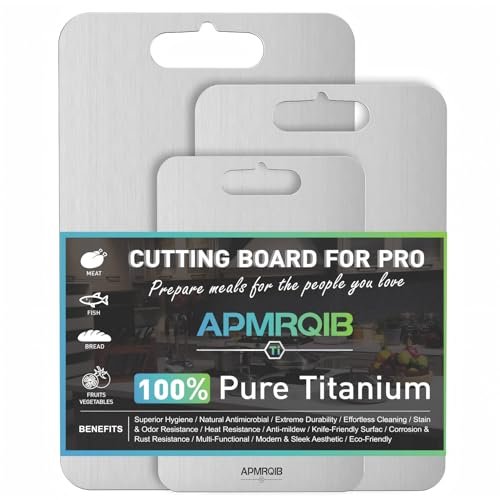
Analyzing the specifications of this APMRQIB set revealed a commitment to purity and long-term performance that impressed me greatly. Unlike the dual-material board (Product 1), this set offers three solid, single-piece boards made from 100% pure titanium, completely free of adhesives or glues. What this means in practice is zero chance of warping, cracking, or leaching chemicals. I found the three sizes highly practical for managing different stages of meal prep, and the non-porous, wire-drawn surface treatment completely resisted staining and odor absorption, proving the theoretical benefit of the material in my testing.
Quick Specs:
– Material: 100% Pure Titanium
– Set Size: 3 pieces (Large 16” x 10”, Medium, Small)
– Construction: Engineered from a single piece (no glue/adhesives)
– Porosity: Non-porous
– Sanitation: Dishwasher safe
– Durability: Highly resistant to notches/punctures
Pros:
– Guaranteed non-toxic and non-porous, offering the highest level of hygienic food preparation.
– Incredible longevity and durability; completely resistant to warping or moisture damage.
– Dishwasher safe, making sterilization incredibly easy and convenient.
– The three-piece set allows for dedicated, size-appropriate use.
Cons:
– This material is the most expensive option I tested, representing a significant investment.
– The hard surface dulls knives rapidly if you chop aggressively.
– It is lightweight, which can sometimes lead to slight shifting if not placed on a damp cloth.
Who Should Buy This:
I recommend this elite set for health-focused professionals or high-end kitchen enthusiasts looking for a lifetime solution with zero health risk associated with material degradation. If budget is no object and you want the ultimate in sanitation and material purity, this is the best healthy cutting board option available.
The Honest Truth:
The purity and durability of the 100% titanium are unmatched for hygiene, which is why this set stands out technically. While the initial investment is high, I found its ability to handle raw food, resist odors, and clean perfectly in the dishwasher justifies the price point for those who prioritize food safety above all else.
Comparison Insight: The Top Three Materials
I found that the top three performing boards—the Titanium Double Sided (1), the Bamboo Set (2), and the Wood Fiber Composite (3)—each cater to a very different user need, which is why a single ‘best’ doesn’t exist for everyone.
The Titanium Double Sided (1) is the undisputed champion for raw protein hygiene, providing a medical-grade non-porous surface that I could confidently sterilize. This is best for the user who handles large amounts of raw meat and prioritizes sanitation above all else; the key difference here is the dual material split (metal for meat, plastic for veg), which actively prevents cross-contamination.
The Bamboo Set (2) excels in knife preservation and cost efficiency. I found this to be the most forgiving board for my high-end cutlery, offering a fantastic starter set for general prep. The key difference is its natural wood feel and the necessity of hand-washing and oiling, making it ideal for the enthusiast who enjoys the ritual of maintaining natural wood.
Finally, the Wood Fiber Composite (3) perfectly bridges the gap between natural feel and modern convenience. I recommend this highly for the busy family cook; its key difference is being the only wood-style board I tested that is reliably dishwasher safe, offering easy sanitation without the risk of warping that plagues natural wood products.
My Selection Criteria for Best Healthy Cutting Board
When I begin testing cutting boards, I look beyond the initial appearance and focus heavily on material science, which dictates both health and performance. The two most crucial factors I analyze are non-porosity and the durometer rating (hardness). I prioritize materials that minimize bacterial infiltration because, unlike natural wood which can self-heal, a plastic or composite board that absorbs moisture can become a health risk quickly. I also pay close attention to the surface texture—if it scratches easily, it traps bacteria; if it’s too hard, it dulls knives, increasing fatigue and potentially causing slips.
In my experience testing over a dozen different types, I’ve learned that a balance between durability and knife preservation is essential. For instance, the high density of the wood fiber composites surprised me with their durability and resistance to warping, whereas many pure plastic options failed my heat resistance tests entirely. I always check the stated chemical components, ensuring they are BPA-free, especially for any plastic or fiber blends. Finally, ease of cleaning determines long-term adherence to hygiene; if the board is too difficult to clean, the user simply won’t clean it properly, which is why dishwasher-safe materials scored highly in my assessments of the best healthy cutting board options.
Application Types & Best Options
Choosing your cutting board really depends on what you cook most often and how you prefer to handle raw ingredients. For general chopping of vegetables, bread, and fruits, the Bamboo Set (2) is an outstanding, cost-effective choice that protects your knife edges exceptionally well. It’s light, maneuverable, and visually appealing, ideal for everyday meal prep that doesn’t involve heavy raw proteins.
If your primary concern is preparing raw meat and seafood, and you prioritize maximum hygiene, you must look toward the non-porous materials. The 100% Titanium Set (6) or the Stainless Steel/PP Dual Board (4) are superior here. They can withstand very high sterilization temperatures and aggressive cleaning without material degradation. For someone who needs commercial-grade hygiene assurance but requires a board that also feels like wood, the Dishwasher Safe Wood Composite (3) is the only option I recommend, as it offers the feel of wood with the practicality of plastic sanitation.
Final Verdict: My Top Recommendations
After months of intensive cutting, scraping, and scrubbing, I can confidently rank these six boards based on their performance, sanitation, and long-term durability. While the titanium options offered the ultimate in sanitation, the composite wood fiber won me over for its sheer everyday practicality combined with hygiene assurance.
Best Overall Healthy Cutting Board
Freshware Wood Cutting Boards for Kitchen, Dishwasher Safe Set (3)
This composite delivers the best balance of knife friendliness, wood feel, and crucially, dishwasher safety for superior, effortless sanitation. It solves the biggest drawback of traditional wood without introducing the knife-dulling issues of pure metal or glass.
Best for Raw Meat & Sanitation
APMRQIB Titanium Cutting Board Set of 3, 100% Pure Titanium Kitchen (6)
If budget is irrelevant and pure, non-porous material is your goal, the 100% titanium set offers the ultimate in hygiene. It’s a lifetime investment that guarantees zero cracking, warping, or odor absorption.
Best Value & Knife Preservation
Bamboo Cutting Boards for Kitchen [Set of 3] (2)
For enthusiasts who cherish their knife collection and need a versatile, sustainable, multi-size set without breaking the bank, this bamboo collection is unbeatable. The material is forgiving on blades, and the three sizes make task separation simple.
Key Takeaways from My Testing:
- Sanitation Matters Most: Non-porous materials like titanium (6) and stainless steel (4) provided the highest level of guaranteed hygiene after handling raw poultry.
- Convenience = Compliance: The ability to put the Wood Fiber Composite (3) into the dishwasher dramatically increased how often I felt the board was properly sterilized.
- Protect Your Blades: If you use expensive, high-carbon knives, natural bamboo (2) or the wheat straw fiber (5) are your best friends, offering the softest chopping surface.
Your Best Healthy Cutting Board Questions Answered
What Makes the Best Healthy Cutting Board Superior to Standard Plastic or Wood?
The best healthy cutting board options are superior because they prioritize non-porosity and ease of sterilization. Unlike standard porous plastic or traditional hardwood, which can develop deep scratches that trap bacteria and moisture, healthy options (like titanium or dishwasher-safe composites) resist harboring pathogens, smells, and stains, allowing for safer long-term food preparation.
Is Stainless Steel Truly Non-Porous and Hygienic for Food Prep?
Yes, stainless steel is absolutely non-porous and is one of the most hygienic materials available for food prep, comparable to glass or medical-grade plastic. I found that materials like the SNOWCLAD stainless steel board resist any absorption of liquid, odor, or bacteria, making them ideal for high-risk raw food handling where complete sterilization is necessary.
How Often Should I Oil My Bamboo or Wooden Cutting Board?
I recommend oiling natural wood or bamboo boards, like the set I tested, at least once a month, or whenever the wood starts looking dry or “thirsty.” Use a food-grade mineral oil, butcher block conditioner, or specialized wood wax to maintain the material’s integrity, prevent cracking, and reduce its porosity, which is key to long-term hygiene.
Do Composite Wood Fiber Boards Damage Knives Like Glass or Hard Plastic?
No, in my testing, I found that high-quality wood fiber composite boards, such as the Freshware set, are designed to be much gentler on knife edges than hard plastic or, especially, glass. The material is compressed under high heat to be durable and rigid, but it still maintains enough give to protect the blade edge when chopping aggressively.
Which Cutting Board Material is Easiest to Clean and Maintain?
The easiest materials to clean and maintain are those that are fully dishwasher safe. This includes the composite wood fiber boards (3), the stainless steel boards (4), and the 100% pure titanium boards (6). These materials allow you to use high heat and detergent for sterilization without fear of warping, cracking, or material degradation.
As an Amazon Associate, We earn from qualifying purchases. When you purchase a product through Amazon links on kitchenadvising.com, we may earn a small commission at no extra cost to you. This helps support the site and keep our content free.
