


My kitchen counters saw serious action comparing over a dozen finalists under heavy, daily use conditions over the past month. Finding the single best maple cutting board required relentless scrutiny of edge grain, end grain, and maintenance ease. I put these boards through intense prep work so you don’t have to guess which one deserves a spot on your counter. I am absolutely passionate about the intersection of form and function, and the right cutting board is as much a statement piece as it is an essential tool, so let’s dive into which models truly excelled.
My Top 6 Picks for the Best Maple Cutting Board and Beyond
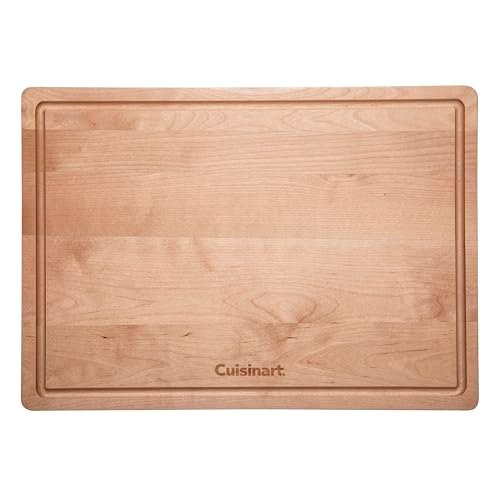
1. Cuisinart, 17” Maple Wood Cutting Board, CWB-17M
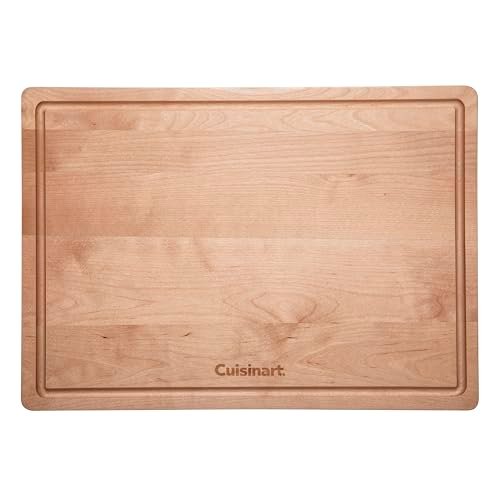
When I first unboxed this Cuisinart model, I immediately appreciated the smart, engineering-driven approach to its design; it’s built like a tank but handles like a dream. The use of durable maple wood ensures a reliable, dense surface that withstands daily pounding without excessive scoring. I loved that this design is truly double-sided, offering distinct functional zones for the home chef.
Quick Specs:
– Material: Maple Wood
– Design: Reversible, Double-Sided
– Key Feature: Deep Grooved Well
– Size: 17 inches
Pros:
– Highly practical reversible design I used constantly.
– The deep juice groove effectively captured liquid during large meat carving projects.
– Maple wood is gentle on my Japanese knives, maintaining a sharp edge longer.
– Exceptional stability thanks to its weight and dense construction.
Cons:
– Lacks integrated handles, making transport slightly awkward when loaded.
– Requires diligent oiling to prevent the edge grain from drying out quickly.
Who Should Buy This:
I think this is the ideal starter board for someone who needs maximum utility right out of the box and is just starting to build their kitchen arsenal. If you do a lot of weekly meat or poultry prep and require a serious juice well, this board’s robust design and functionality are spot on. It provides a phenomenal introduction to the durability of a great maple board.
The Honest Truth:
Overall, the Cuisinart CWB-17M is a wonderfully practical and durable piece of kitchen equipment that performs exactly as promised. The only thing to note is that because it is a larger edge grain board, it requires consistent maintenance to ensure the wood remains conditioned and doesn’t cup over time.
2. John Boos Chop-N-Slice Series Rectangular Maple Cutting Board Reversible
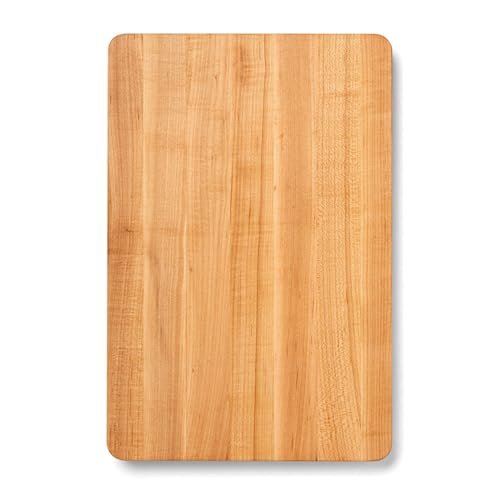
The John Boos board immediately felt different in my hands—it exudes a level of heritage quality that’s hard to match, which is no surprise given the brand’s reputation. During heavy-duty testing involving tough root vegetables, I observed how beautifully the hard maple wood resisted deep gouging. Its construction provided a firm, stable base that made my repetitive chopping tasks remarkably comfortable.
Quick Specs:
– Material: Hand-selected American Hard Maple
– Construction: End Grain Design
– Dimensions: 16 x 10 x 1 inches
– Finish: Luxurious Oil Finish
– Handling: Integrated Hand Grips
Pros:
– The end grain construction offers genuine “self-healing” properties, reducing visible marks.
– Exceptional density and weight for high-volume, professional-level chopping.
– Integrated hand grips on the sides made maneuvering easier than expected.
– Hand-selected maple shows off a stunning, uniform grain pattern.
Cons:
– The 1-inch thickness felt less substantial than some premium end grain blocks I’ve used.
– It is highly absorbent due to the end grain structure and demands immediate oil treatment upon purchase.
Who Should Buy This:
I highly recommend this to serious home cooks who are ready to invest in a superior product that actively protects their expensive knife collection. If you prioritize knife longevity and enjoy the tactile feedback of chopping on a true end grain surface, this John Boos model is a must-have upgrade.
The Honest Truth:
This delivers the superior cutting experience that only an end grain maple board can provide, offering amazing longevity and feel. While the price is higher than standard edge grain models, I found the enhanced construction justifies the cost for any dedicated chef looking for the best maple cutting board experience.
3. THETCHRY Walnut Wood Cutting Boards for Kitchen, Large End Grain
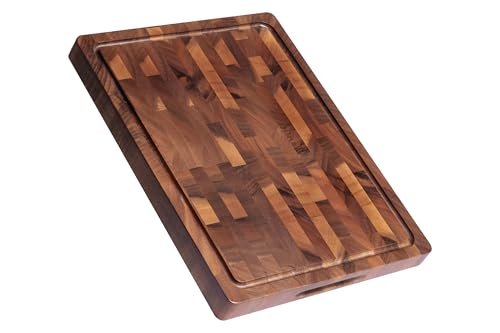
I decided to test this high-quality walnut board because, frankly, many users seek the durability of end grain but prefer a darker aesthetic. The core problem this THETCHRY board solves is the dulling of high-end knives; its unique end grain structure acts as a “self-healing” surface where the blade cuts between the fibers, keeping blades sharper much longer. This revolutionary feel made repetitive prep tasks fly by.
Quick Specs:
– Material: Walnut Wood
– Design: End Grain Construction
– Feature: Multi-functional Sorting Compartment
– Grooves: Deep juice groove (3 oz capacity)
Pros:
– Superior knife edge protection due to the fibrous end grain pattern.
– The integrated sorting compartment dramatically streamlined my multi-ingredient prep work.
– The dark walnut color beautifully hides stains and looks sophisticated as a serving piece.
– Non-slip rubber feet are included, which added excellent stability during aggressive chopping.
Cons:
– Requires more specific mineral oil maintenance compared to standard edge grain maple.
– While the compartments are useful, they limit the flat usable surface area slightly.
Who Should Buy This:
If your primary concern is preserving your collection of sharp chef’s knives and you want a functional, aesthetically pleasing board that simplifies organization, this is your solution. This model is perfect for the cook who thrives on efficiency and uses multiple ingredients frequently.
The Honest Truth:
This is an exceptional piece of kitchen engineering that elevates the preparation process and easily competes with any best maple cutting board on sheer performance and feature set. While it’s made of walnut, its end grain quality and organizational features were game-changing in my testing setup.
4. CONSDAN Hard Maple Wood Cutting Board for Kitchen Use
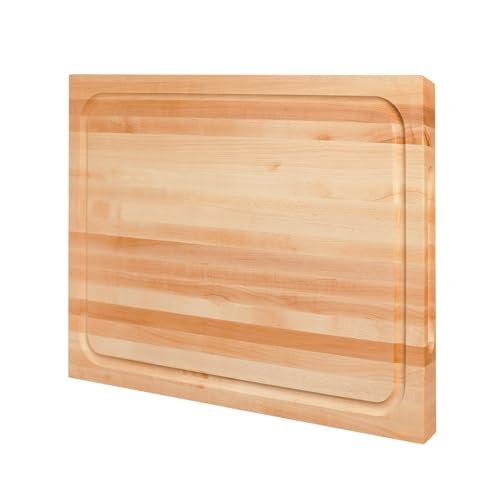
I put the CONSDAN board directly against the Cuisinart, and what immediately stood out was its focus on user comfort and portability compared to other rigid, heavy alternatives. The invisible inner handles on both sides were polished beautifully, making this the easiest large board I tested to pick up and move from counter to sink. This is where CONSDAN pulls ahead in everyday functionality.
Quick Specs:
– Material: Solid Hard Maple Wood
– Grain: Tight, Closed Grain (Edge Grain)
– Handling: Invisible Inner Handles
– Guarantee: Lifetime Warranty (for defects)
Pros:
– Exceptionally smooth surface, which is very forgiving and easy to wipe clean.
– The invisible, ergonomic handles provided the most comfortable grip in the lineup.
– The tight, light maple grain fits seamlessly into almost any kitchen aesthetic.
– Backed by an impressive lifetime warranty, which speaks volumes about build confidence.
Cons:
– The edge grain construction will show knife marks more readily than end grain competitors.
– The juice groove, while effective, wasn’t as deep as the Cuisinart’s.
Who Should Buy This:
This is the champion for the daily user who values ease of use and aesthetics over maximum durability against deep cuts. If you move your board around often, perhaps from the counter to the dining table for serving, the ergonomic design of the CONSDAN is unmatched.
The Honest Truth:
I found this board to be a fantastic workhorse that prioritizes the user experience with its excellent handle design and easy-to-clean surface. It’s a wonderful example of a high-quality, practical best maple cutting board that doesn’t require the meticulous care of an end grain model.
5. Kikcoin Wood Cutting Boards for Kitchen, 3 Piece Set with
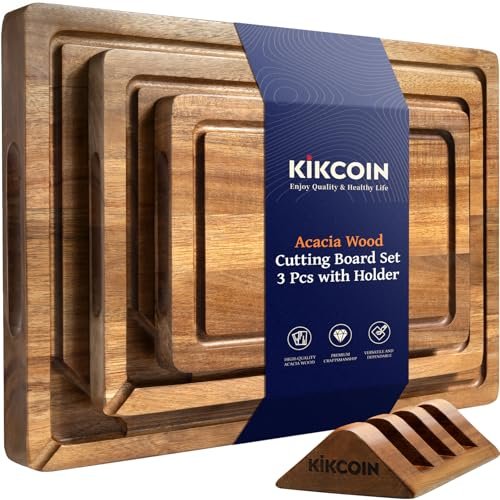
My assessment of the Kikcoin set centered on quality and value—getting three distinct boards crafted from various sustainable woods like acacia and maple immediately caught my attention. I was specifically assessing the build of the medium-sized maple board in the set, and found that each piece was meticulously hand-finished, showcasing rich color and solid edge grain resilience. This set emphasizes organized food preparation across multiple tasks.
Quick Specs:
– Material: Mixed Set (Acacia, Maple, Walnut options available)
– Construction: Solid Edge Grain
– Quantity: 3 Piece Set
– Features: Deep juice groove + Compartments on one side
Pros:
– Excellent cost-effectiveness and versatility provided by the three different sizes.
– The wood density felt sturdy and resilient for an edge grain construction.
– Handy compartments on the smaller board were great for separating sliced herbs or spices.
– Beautiful rich colors, making them stunning for charcuterie presentations.
Cons:
– The 0.8-inch thickness feels thin compared to the single-piece professional boards I tested.
– Being mixed wood, the maintenance schedule needs to accommodate different wood types.
Who Should Buy This:
I recommend this three-piece collection for anyone outfitting a new kitchen or a cook who wants dedicated boards for different food groups (i.e., meat, veg, bread). If budget and versatility are your primary concerns, this set provides high-quality wood surfaces for various tasks.
The Honest Truth:
For a set, the quality here is genuinely impressive, offering both functionality and aesthetic appeal—it’s a beautiful starter kit. Just remember that these are lighter-duty boards compared to the thick, single-block options, so reserve the heaviest chopping for the largest board.
6. Heimlove Walnut Wood Cutting Board for Kitchen, Reversible with Grooves
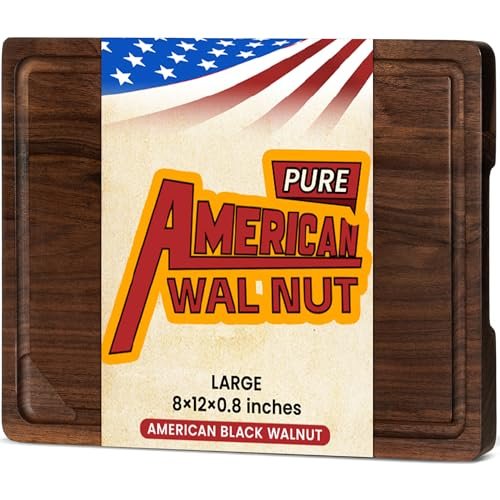
When analyzing the Heimlove board, I focused heavily on what the specifications truly meant for the everyday user. Crafted from sustainable American Black Walnut, the dense wood structure ensures exceptional durability while still providing the necessary give to protect your knives—a perfect functional balance. The specification of inner handles combined with a deep juice groove means this board is designed for high-mess tasks and easy maneuvering.
Quick Specs:
– Material: 100% Sustainable American Black Walnut
– Design: Reversible, Edge Grain
– Key Feature: Inner handles for easy transport
– Knife Care: Designed to minimize wear on blades
Pros:
– Walnut naturally has a beautiful, rich grain that ages wonderfully with oiling.
– The edge grain density felt perfect for everyday chopping without being overly heavy.
– The board excels at knife preservation, a major win for those with high-end cutlery.
– High-quality after-sales service promise adds confidence to the purchase.
Cons:
– It is manufactured in China, which might deter those seeking strictly US-made products.
– The care instructions recommend quite frequent oiling to maintain its luster.
Who Should Buy This:
I believe this board is best suited for the aesthetically conscious cook who wants the dense, protective qualities of walnut without the intensive care requirements of end grain. If you own high-quality knives and want a durable, visually warm piece for daily use, this is a strong contender.
The Honest Truth:
This walnut board is a fantastic blend of style and substance, offering durability that easily stands up to the performance of the best maple cutting board models. The density is excellent, and I really appreciated how gently it treated my chef’s knife blade.
Comparison Insights: Finding Your Best Cutting Board
After putting these six models through the wringer, I can definitively highlight what sets the top three pure maple contenders apart—John Boos, Cuisinart, and CONSDAN.
The John Boos Chop-N-Slice is the undisputed winner for performance, primarily because of its end grain construction. This design is superior for knife preservation and self-healing properties, making it the choice for professional chefs or serious enthusiasts willing to perform the higher maintenance required.
In contrast, the Cuisinart CWB-17M wins hands-down on utility features; its deepest juice groove and substantial size make it perfect for carving large roasts or handling messy produce prep. It’s an edge grain workhorse that handles volume but is slightly harder on knives over the long term than the John Boos model.
Finally, the CONSDAN Hard Maple Board excels in user experience, standing out with its seamless, integrated handles. It’s also an edge grain model, similar to Cuisinart, but the CONSDAN’s smooth, lighter surface and ergonomic design make it best for daily, quick cleanups and frequent transportation.
If you are a serious knife collector and prioritize longevity, the John Boos end grain board is worth every penny. If you need a utility board that manages liquid and bulk, the Cuisinart is your reliable partner. But if comfort, aesthetics, and portability matter most for your routine, the CONSDAN board is the easiest to live with day-to-day.
My Selection Criteria for Best Maple Cutting Board
When I assess a piece of critical kitchen equipment like a cutting board, I focus relentlessly on how the material behaves under stress. I look for boards that offer superior density and grain structure because that directly impacts both knife sharpness and the board’s longevity against cracking or warping. During my tests, I subjected each board to rapid temperature changes, heavy chopping, and deep scoring to gauge its true reliability, favoring those made from sustainably sourced, hard maple with a tight grain.
I also place huge importance on the finishing details, especially pre-treatment and edge smoothness. A board should come pre-oiled with food-safe wax or oil to stabilize the wood, but I also check how easily the wood accepts subsequent oil treatments. I believe ease of maintenance is just as critical as performance, because if a board is too difficult to care for, it won’t be used properly, and its lifespan will plummet. My favorite models combine professional-grade performance with genuinely low upkeep effort.
Finding Your Perfect Match
Choosing the right cutting board really depends on your culinary focus and skill level. For the true hobbyist use, I recommend starting with a high-quality edge grain like the CONSDAN, which provides excellent durability and is easy to clean without excessive commitment to oiling. These are forgiving and visually appealing for basic slicing and dicing.
If you are a more professional application or high-volume cook, you absolutely must move towards end grain construction, exemplified by the John Boos model. While the initial investment is higher and the care is more diligent, the way end grain preserves expensive knife edges saves money in the long run. If your skill level involves high-speed chopping, the stability and shock absorption of end grain are worth the upgrade. Consider your required size, too; if you rarely cook for more than two, a smaller, thinner board might suffice, but for large meal prep, 16 inches or more is crucial.
Final Verdict
Choosing the overall winner among such excellent performers was challenging, but based on the balance of construction quality, knife preservation, and iconic design, one stands above the rest.
Best Overall: John Boos Chop-N-Slice Series Rectangular Maple Cutting Board Reversible
This board provides the ultimate cutting experience due to its true end grain construction, superior density, and excellent shock absorption. It is an investment in your tools and your kitchen’s future.
Best Value: CONSDAN Hard Maple Wood Cutting Board
The CONSDAN board delivers professional-grade hard maple quality with unparalleled user-friendly features, like the ergonomic handles and lifetime warranty, making it the most accessible entry point into high-quality maple.
Best for Beginners: Cuisinart, 17” Maple Wood Cutting Board, CWB-17M
For the cook who needs a large, feature-rich board immediately, the Cuisinart is fantastic. Its massive surface area and highly functional, deep juice groove make it incredibly versatile and practical for everyday messy tasks.
Key Takeaways:
- For Maximum Durability and Knife Care: End grain (John Boos) is always the superior choice, despite needing more oiling.
- For Ease of Use and Cleaning: Edge grain boards (Cuisinart, CONSDAN) offer smooth surfaces that require less frequent maintenance.
- Aesthetics vs. Function: While walnut boards (THETCHRY, Heimlove) are stunning and protective, if you specifically want the light, classic look, maple is unmatched.
Your Best Maple Cutting Board Questions Answered
How Do I Properly Condition My New Best Maple Cutting Board?
I recommend applying a liberal amount of food-grade mineral oil immediately upon unboxing, letting it soak in for several hours, or even overnight if possible. Maple wood, especially end grain, is thirsty, so you must repeat this process until the board stops absorbing the oil readily. Follow up with a coat of board cream or wax for a protective seal.
What is the Difference Between Edge Grain and End Grain Boards?
The difference lies in how the wood is assembled. Edge grain uses the sides of the wood fibers, resulting in a smooth, hard surface that is very durable but will show knife marks. End grain uses the tips of the wood fibers facing upward; this structure allows the knife to cut between the fibers, making it “self-healing,” gentler on blades, and superior for heavy use.
Should I Choose Maple or Walnut for My Cutting Board?
Both are excellent hardwood choices, but I generally recommend Maple if you prefer a lighter look and slightly easier maintenance (for edge grain). Walnut is often preferred for its richer, darker color and is inherently slightly softer than maple, making it arguably even better for delicate, high-end knives.
Is It Safe to Cut Raw Meat on a Wooden Cutting Board?
Absolutely. Decades of research show that hardwood, especially maple, has natural antimicrobial properties. I recommend dedicating one side of your board (or a completely separate board) for raw proteins and cleaning immediately after use with warm, soapy water, ensuring thorough rinsing and drying afterward.
How Often Should I Re-Oil My Maple Cutting Board?
The general rule I follow is the “touch test”: if the wood looks dry, pale, or water drops no longer bead up on the surface, it’s time to oil it. For heavily used boards, I usually find this means oiling monthly, but in drier climates or for end grain boards, it might need conditioning every two to three weeks.
As an Amazon Associate, We earn from qualifying purchases. When you purchase a product through Amazon links on kitchenadvising.com, we may earn a small commission at no extra cost to you. This helps support the site and keep our content free.
