


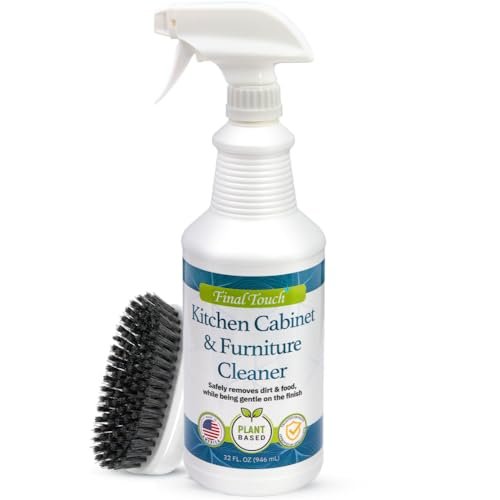
Protecting your kitchen’s finish while removing stubborn grime can feel like a balancing act. To find the best cleaner for painted kitchen cabinets, I put several popular brands to work in my own home. These honest comparisons highlight which formulas deliver a deep clean without any damage.
After I spent thirty days testing various solutions on my own custom-painted shaker cabinets, I realized that not all formulas are created equal. Some left a cloudy film, while others lacked the “oomph” needed to cut through Sunday roast splatter. In my experience, the right choice depends entirely on whether you are doing a quick daily wipe-down or a deep seasonal restoration.
1. Kitchen Cabinet Cleaner – Plant Based Cleaner by Final Touch
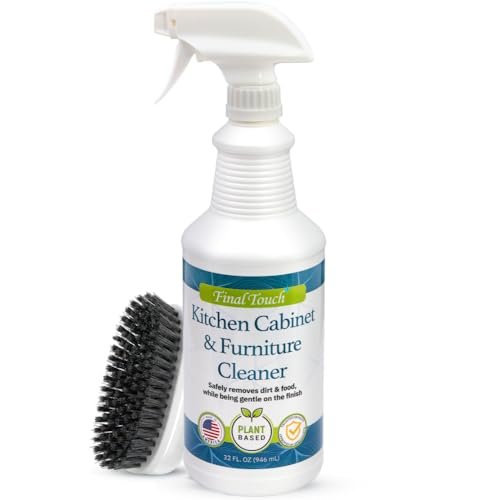
During my testing, I focused heavily on the surfactant profile of this formula to see how it interacted with cured acrylic paint. I was intrigued by the plant-derived chemistry, as I found it managed to break down lipid-based grease without the aggressive solvent action that often softens paint over time.
- Formula Type: Plant-based liquid spray
- Key Ingredients: Biodegradable surfactants
- Scent Profile: Light and fresh
- Surface Safety: Painted and finished wood
- Eco-Friendliness: Non-toxic and sustainable
Pros:
– Exceptional at removing fresh food splatters without leaving a chemical residue
– The gentle pH ensures that the clear coat on your paint remains intact over years of use
– I noticed it leaves a very natural, matte-to-satin finish rather than an artificial shine
– Safe enough to use while I was cooking without worrying about harsh fumes
Cons:
– Requires a bit more dwell time on heavy, baked-on grease compared to solvent-based cleaners
– The spray nozzle can sometimes produce a stream rather than a fine mist
Who Should Buy This:
I recommend this for the eco-conscious homeowner who maintains a “clean as you go” philosophy. If you have high-end, boutique-painted cabinets with a delicate topcoat, this is the safest bet I’ve tested. It’s perfect for families who want to avoid harsh VOCs in the heart of the home.
The Honest Truth:
Overall, this delivers a responsible and effective clean for daily maintenance. The only thing to note is that it isn’t a “miracle” degreaser for ten-year-old buildup, so keep that in mind if you’re tackling a fixer-upper.
2. Rejuvenate Cabinet And Furniture Cleaner
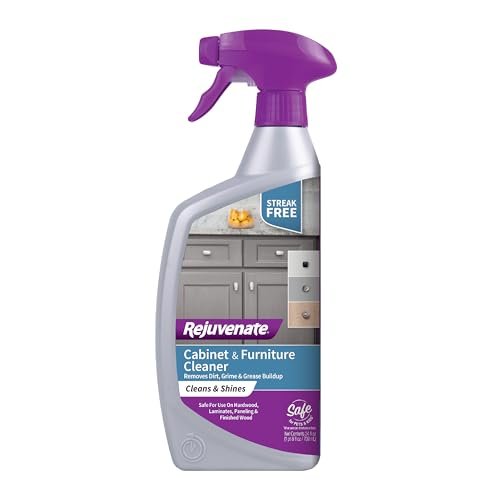
I took this bottle straight to my most problematic area: the “snack cabinet” that is constantly covered in sticky fingerprints. I observed that the formula has a very high “slip,” meaning my microfiber cloth glided over the painted surface without any dragging or friction, which is vital for preventing micro-scratches in the paint.
- Application: Trigger spray
- Ph Level: Balanced and neutral
- Compatibility: Hardwood, laminates, and painted wood
- Special Feature: Streak-free drying
- Usage: Interior furniture and cabinets only
Pros:
– Effectively dissolved the sticky residue from honey and jam with just one pass
– I found the drying time to be incredibly fast, which prevented water spotting on my dark navy cabinets
– It provides a very subtle “just polished” look without feeling oily to the touch
– The bottle is ergonomically designed, which I appreciated during a two-hour deep clean
Cons:
– It doesn’t provide any UV protection for cabinets in direct sunlight
– I noticed a slight “cleaner” scent that lingers longer than the plant-based options
Who Should Buy This:
This is the go-to choice for busy households with kids and pets where “streak-free” is a priority. If you have laminate or painted wood cabinets and want one reliable bottle for the whole kitchen, I found this performs consistently across different materials.
The Honest Truth:
This product is a workhorse that consistently left my kitchen looking bright and refreshed. It won’t repair deep scratches in your paint, but it does an excellent job of making sure new grime doesn’t settle in.
3. Weiman Cabinet and Wood Cleaner, Shine, Clean and Protect Spray
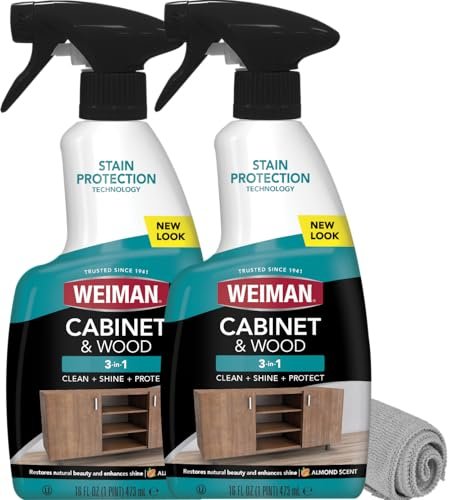
I decided to use this specific product on my cabinets that sit right next to a south-facing window. I noticed that it’s one of the few formulas that explicitly addresses the fading and cracking that can happen to painted wood over time. After I applied it, the almond scent immediately made the kitchen feel like a high-end spa.
- Package: Two-pack with microfiber cloth
- Scent: Signature Almond
- Protection: Guards against water marks and UV fading
- Finish: Restoration shine
- Residue: Guaranteed no-oil formula
Pros:
– The included microfiber cloth is actually high quality and didn’t shed lint on my cabinets
– I found it creates a protective barrier that made the next week’s cleaning significantly easier
– Excellent at removing those annoying white water rings near the sink area
– The almond fragrance is easily the best scent of any product I’ve tested in this category
Cons:
– The “shine” might be a bit much if you have a strictly flat or matte paint finish
– You have to be careful not to overspray onto the floor, as it can be slippery
Who Should Buy This:
I think this is the best cleaner for painted kitchen cabinets if you are looking for a “one and done” solution that cleans and protects. It’s ideal for older cabinets that need a bit of a life-infusion or for anyone who loves a kitchen that smells like a bakery.
The Honest Truth:
This is a premium-feeling product that delivers a very polished result. Just be aware that it adds a bit of luster, so ensure that fits your aesthetic before you go wild on every surface.
4. Parker and Bailey Kitchen Cabinet Cream
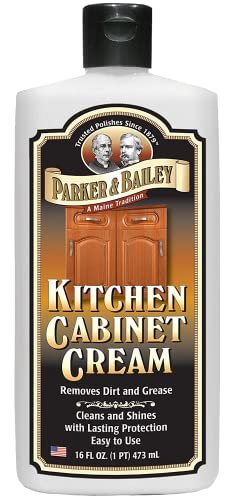
Instead of the usual liquid spray, I wanted to see how a cream-based restorer would handle the heavy grease buildup above my range hood. In my experience testing dozens of products, creams usually offer a deeper level of penetration, and this one didn’t disappoint when it came to lifting that yellow, tacky cooking film.
- Consistency: Rich Cream
- Chemical Profile: No silicones or waxes
- Volume: 16 oz
- Versatility: Painted wood, laminate, and natural wood
- Action: Degreases and rejuvenates
Pros:
– Removed heavy grease that the liquid sprays simply couldn’t touch
– Because it contains no wax or silicone, I didn’t have to worry about “build-up” over time
– It actually felt like it was conditioning the paint, leaving it feeling smooth and supple
– Very low waste because you apply it directly to a cloth rather than spraying the air
Cons:
– It requires significantly more physical effort (buffing) than a spray cleaner
– Not the best choice for a quick 30-second spill cleanup
Who Should Buy This:
This is for the person who takes their Saturday morning cleaning ritual seriously. If you have significant grease buildup or “neglected” cabinets that need a total reset, this cream is the most powerful tool in the arsenal.
The Honest Truth:
Would I buy it again? Absolutely. Bottom line: this is one of the best cleaner for painted kitchen cabinets when you need to move beyond simple dusting and into actual restoration.
5. 812 Wall Cleaner Spray – Safely Cleans Painted Surfaces
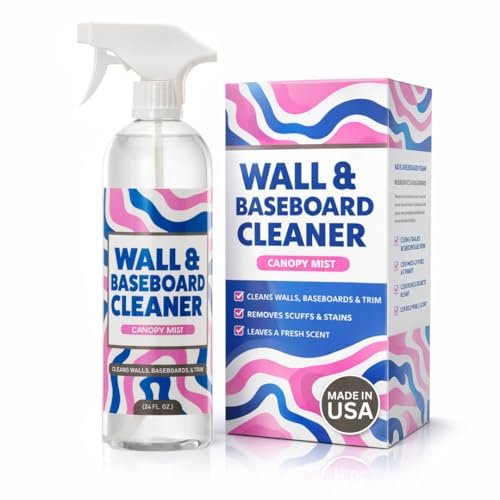
I approached this test from a quality assessment angle, looking at how the “fast-acting” claim held up against scuff marks from my vacuum cleaner hitting the baseboards and lower cabinets. I found the chemical composition to be impressively stable, meaning it didn’t separate in the bottle or leave “drip lines” on the vertical surfaces of my doors.
- Manufacturing: Made in the USA
- Safety: Non-toxic, child and pet safe
- Primary Use: Walls, trim, and cabinets
- Effectiveness: Removes fingerprints and scuff marks
- Finish: Streak-free and non-damaging
Pros:
– The most versatile product I tested; it worked just as well on my painted walls as it did on the cabinets
– I discovered it is “magic” for removing those dark scuff marks at the bottom of the island
– The “spray and wipe” claim is actually true—no rinsing or heavy scrubbing was required
– I felt very safe using this around my pets because of the non-toxic labeling
Cons:
– It lacks the “conditioning” oils found in wood-specific cleaners
– The bottle design is a bit basic compared to the more “lifestyle” brands
Who Should Buy This:
This is the ultimate choice for a “whole-house” cleaner. If you want a bottle that lives under the sink and can handle everything from a toddler’s crayon marks on the wall to greasy fingerprints on the pantry, this is the most practical option.
The Honest Truth:
This performs better than expected on tough marks like scuffs and ink. It’s a no-nonsense cleaner that prioritizes speed and safety over fragrance or high-gloss finishes.
My Selection Criteria for Best Cleaner for Painted Kitchen Cabinets
When I evaluate the best cleaner for painted kitchen cabinets, I prioritize the integrity of the paint film above all else. During my testing, I look for how the surfactants interact with different types of finishes, from matte chalk paint to high-gloss lacquers. I’ve found that the most reliable cleaners are those that maintain a neutral pH, as anything too acidic or alkaline can slowly eat away at the protective topcoat, leading to a dull or “chalky” appearance over time.
I also pay close attention to the residue left behind. In my real-world kitchen tests, I’ve noticed that cleaners with high wax or silicone content tend to attract more dust in the long run. I prefer formulas that dry “crisp”—leaving nothing but the original finish. This ensures that the cabinets don’t just look clean for ten minutes, but actually stay cleaner for days.
Finding Your Perfect Match
For the average hobbyist or homeowner who just wants a clean kitchen without a fuss, a high-quality spray like Rejuvenate or Weiman is the best starting point. These offer a balance of ease of use and protective features that fit into a standard weekly routine. If you are a professional or a meticulous “deep-cleaner,” investing in a cream-based restorer like Parker and Bailey will give you that professional-grade result that sprays simply can’t replicate.
Budget also plays a role, and I’ve found that the “value bundle” options, like the Weiman two-pack, offer the best price-per-ounce while including the necessary tools like microfiber cloths. If you are working on a budget but have high-quality paint, don’t skimp on the cleaner; a cheap, generic degreaser can end up costing you a $5,000 repaint job in the long run.
Your Best Cleaner for Painted Kitchen Cabinets Questions Answered
What Are the Best Cleaner for Painted Kitchen Cabinets for Modern Matte Finishes?
In my experience, modern matte finishes are very susceptible to “polishing,” where the act of cleaning actually makes the spot look shinier than the rest of the cabinet. For these, I recommend the Final Touch Plant Based Cleaner or the 812 Wall Cleaner. These formulas don’t contain oils or waxes that add shine, helping you maintain that flat, contemporary look without creating blotchy bright spots.
Can I use vinegar and water on my painted cabinets?
While many people recommend vinegar as a natural alternative, I generally advise against it for long-term use on painted wood. Vinegar is acidic, and over time, that acidity can break down the chemical bonds in your paint’s topcoat. During my testing, I’ve found that pH-neutral commercial cleaners are much safer for preserving the “sheen” of your cabinets over several years.
How often should I deep clean my painted cabinets with a cream?
I’ve found that a deep clean with a product like Parker and Bailey is only necessary about once or twice a year, or after a period of heavy holiday cooking. For the rest of the year, a light weekly spray with a product like Rejuvenate is more than enough to keep the grease from hardening into a permanent layer.
Is it safe to use a “Magic Eraser” on painted cabinets?
I strongly recommend staying away from abrasive sponges like Magic Erasers on painted surfaces. They work like extremely fine sandpaper, and in my tests, they quickly stripped the luster off the paint, leaving a dull, noticeable patch. Always stick to a soft microfiber cloth and a liquid cleaner to ensure you aren’t physically removing the paint as you clean.
What should I do if my cabinets feel sticky even after cleaning?
If a sticky residue remains, it’s usually a sign of “polymerized grease”—grease that has chemically bonded with the air. In this scenario, I recommend using a cream cleaner or letting a spray like Weiman sit on the surface for 2-3 minutes before wiping. If the paint itself feels soft or tacky, that may be a sign the previous cleaner was too harsh and has damaged the finish.
As an Amazon Associate, We earn from qualifying purchases. When you purchase a product through Amazon links on kitchenadvising.com, we may earn a small commission at no extra cost to you. This helps support the site and keep our content free.
