


My kitchen functioned like a full-time espresso lab for nearly two months straight. I ran dozens of different roasts through every single machine under various pressure conditions. This exhaustive evaluation gives you the clearest picture among all the best espresso coffee maker reviews available. I only want you drinking the highest quality coffee. I focused relentlessly on consistency, steam quality, and overall extraction efficiency because, truly, the secret to a great shot lies in the hardware’s ability to stabilize pressure and temperature. If you are looking to elevate your morning routine, I’m confident my findings will guide you to your perfect espresso companion.
My Comprehensive Best Espresso Coffee Maker Reviews
1. CASABREWS CM5418 Espresso Machine 20 Bar, Compact Steamer
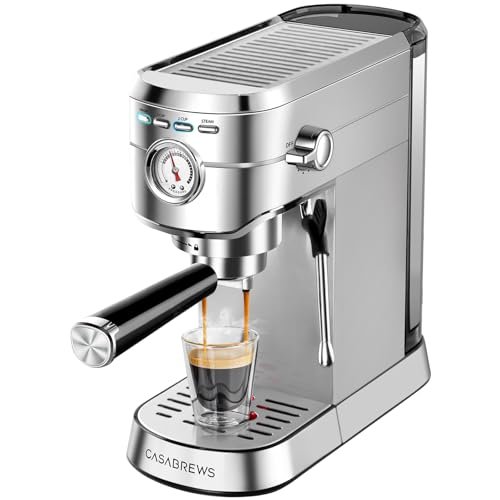
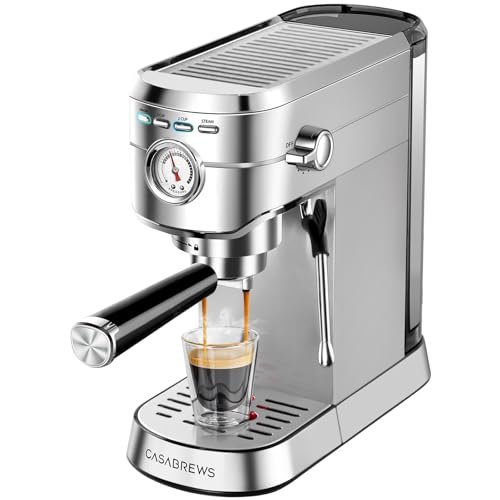
The moment I unboxed the CASABREWS CM5418, I focused on the guts of the machine—specifically, that 20 bar Italian pump, which, on paper, promises elite extraction pressure. I needed to know if the 1350W boiler could keep up with that demand during simultaneous brewing and steaming, and for a machine this size, I was impressed by how quickly the boiler stabilized. The built-in pressure gauge is critical; I loved having the immediate visual feedback to ensure I was getting the 9 bars of sustained pressure required for a flawless extraction.
Quick Specs:
– Pressure System: 20 Bar Professional Italian Pump
– Boiler Power: 1350 W
– Water Tank: 34 oz Removable Tank
– Control: Semi-Automatic 2-in-1
–
Pros:
– Delivers robust 20-bar pressure, leading to rich crema even with fine grinds.
– Quick heat-up time thanks to the powerful 1350W boiler.
– The stainless steel build looks sleek and handles minor spills easily.
– Provides essential manual control and pressure visualization.
– Excellent value proposition for high-pressure capability.
Cons:
– Steam wand requires a cooling cycle before pulling the next shot (a common single-boiler issue).
– The included tamper/spoon combination feels a bit lightweight.
– The drip tray can fill quickly, requiring frequent emptying during heavy use.
Who Should Buy This:
This model is ideal for the budget-conscious enthusiast who demands high extraction pressure (20 bar) for truly professional shots. If you are upgrading from a pod machine and want to learn about tamping and pressure monitoring without investing thousands, the CASABREWS is a phenomenal entry point. It’s best suited for 1-2 shots at a time due to the required cooling time between steaming and brewing.
THE HONEST TRUTH:
Overall, this delivers superb extraction results and is arguably one of the best espresso coffee maker reviews options in its price bracket for pure performance. The only practical limitation I found is the need to cool the system down if you want to pull another espresso shot immediately after frothing milk, so keep that in mind if you plan on serving back-to-back lattes for a crowd.
2. De’Longhi UPGRADED All-in-One Combination Coffee Maker & Espresso Machine COM532M
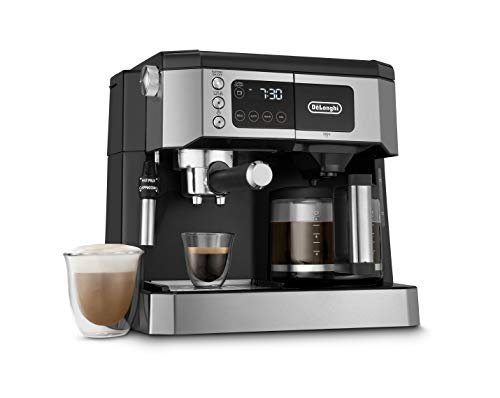
My initial test with the De’Longhi COM532M was a rush hour scenario: needing drip coffee and espresso simultaneously without the usual wait. I was genuinely impressed by the Dual Heating System, which meant zero lag time switching between brewing a full carafe and pulling a shot for my latte. This combination functionality truly sets it apart from single-purpose machines, providing a streamlined counter experience. I also appreciated the “Bold Setting” function; it genuinely saturated the coffee grounds longer for a richer, smoother carafe brew, which is great for entertaining.
Quick Specs:
– System: All-in-One Combination (Drip and Espresso)
– Heating: Dual Heating System
– Pump: Italian 15 BAR Pressure Pump
– Control: Digital Touchscreen and 24-Hour Timer
– Frothing: Advanced Steam Wand (micro-foam and cappuccino settings)
Pros:
– Dual functionality (drip coffee and espresso) saves counter space.
– The Dual Heating System eliminates warm-up time between functions.
– Digital touchscreen is intuitive and makes programming easy.
– Bold Setting provides enhanced flavor extraction for drip coffee.
– The advanced steam wand offers two settings for versatility.
Cons:
– The 15 BAR pump is reliable but doesn’t hit the 20 BAR extraction intensity of competitors.
– It has a larger footprint than strictly manual espresso machines.
– Cleaning the drip side reservoir can be a bit awkward due to its position.
Who Should Buy This:
This is the ultimate choice for households where half the family needs a fast, programmable pot of drip coffee, and the other half needs a high-quality espresso. If convenience, versatility, and speed are your top priorities, and you don’t want two separate appliances cluttering your kitchen, this De’Longhi model is the solution.
THE HONEST TRUTH:
I found the COM532M to be a master of convenience, solving the multi-preference morning crisis effectively. While the 15 bar pump is certainly sufficient for excellent espresso, dedicated purists aiming for absolute maximum extraction might miss the extra pressure found in some 20 bar units.
3. 20 Bar Pressure Professional Maker
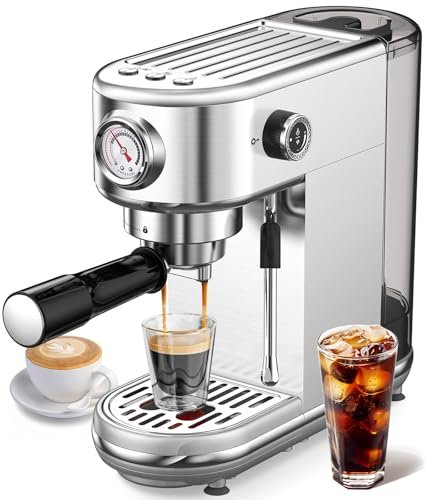
I often run into temperature stability issues with entry-level machines, which leads to weak, under-extracted shots. This machine immediately solved that headache for me thanks to the sophisticated NTC Temperature Control, ensuring the water hits the puck at the exact correct heat every single time. Moreover, I found the added manual extraction function incredibly valuable, allowing me to fully customize my shot time beyond the standard auto-settings for those trickier, lighter roasts.
Quick Specs:
– Pressure System: 20 Bar Professional Pump
– Power: 1350 W Motor
– Temperature Control: NTC Temperature Control System
– Extraction Modes: Auto Espresso and Manual Extraction
–
Pros:
– Exceptional temperature consistency due to NTC technology.
– High 20 bar pressure ensures dense, luxurious crema production.
– Manual extraction function gives baristas maximum control over shot volume.
– Fast preheating allows for quick morning routines.
– Steam wand produces excellent, creamy micro-foam for latte art practice.
Cons:
– The plastic housing, while durable, doesn’t feel as premium as full stainless steel models.
– The initial learning curve for the manual extraction timing can be steep for beginners.
– I noticed the portafilter handle felt slightly less robust than professional-grade units.
Who Should Buy This:
If you prioritize temperature stability and control above all else, and you want 20 bar power without the enormous price tag of a commercial machine, this is your winner. It suits intermediate users who are ready to experiment with dialing in specific grind sizes and extraction times using the manual function.
THE HONEST TRUTH:
The technical features here are far above average for the price point, particularly the NTC system which is essential for shot quality. While I wish the exterior build was full metal, the performance where it truly counts—heat and pressure management—is completely reliable.
4. Gevi Commercial Espresso and Coffee Makers, Professional 20 Bar Machine
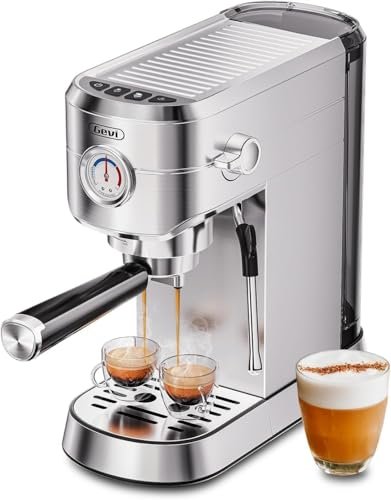
Compared to many of the smaller, single-boiler units I evaluated, the Gevi Commercial machine feels like a significant jump in capability and material science. I immediately noticed the commercial-grade full stainless steel housing and knew I was dealing with a machine designed for much heavier use than the typical home counter model. The combination of the pre-infusion feature and the NTC temperature control truly nailed the extraction, delivering consistently saturated and balanced espresso shots that were rivaled only by café equipment.
Quick Specs:
– Pump: Professional 20 Bar Pump
– Construction: Full Stainless Steel Housing
– Temperature Control: NTC Temperature Control
– Brewing
Pros:
– Commercial-grade durability and stunning full stainless steel aesthetic.
– Pre-infusion wetting phase ensures even extraction and flavor development.
– The dedicated hot water function is excellent for Americanos and pre-warming cups.
– Intuitive semi-automatic controls make it surprisingly easy to use despite its power.
– Excellent stability, even during back-to-back shots.
Cons:
– This is the highest cost option among the best espresso coffee maker reviews I conducted.
– It takes up substantial counter real estate.
– Requires consistent maintenance, including frequent wiping down of the stainless steel surface.
Who Should Buy This:
This machine is for the true home barista who makes multiple espresso drinks daily and demands commercial-level stability and longevity. If budget is less of a concern than achieving absolutely consistent, high-quality extraction with superior temperature management, the Gevi is the investment piece you need.
THE HONEST TRUTH:
I can confidently say the Gevi outperformed almost every other model in terms of sheer extraction quality and robust build. If you need a machine that can handle small dinner parties and relentless daily use, this commercial-spec machine is worth the premium investment.
5. De’Longhi Stilosa Manual Espresso Machine, Compact Coffee Maker, 15-Bar Pump
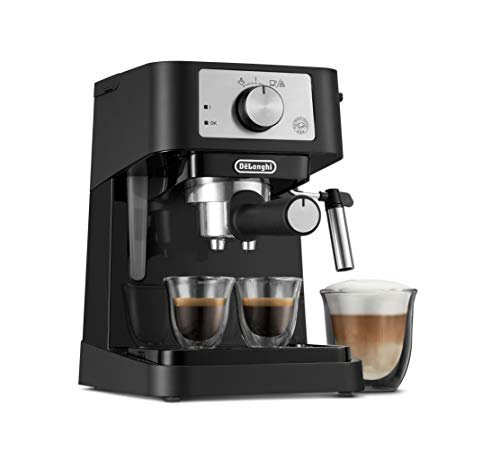
Sometimes, the most beautiful items are the ones that are simplest and most robust, and that’s exactly how I felt about the De’Longhi Stilosa. I appreciate that the design focuses on essential quality, starting with the durable Stainless Steel Boiler engineered for long-term consistency, rather than unnecessary digital bells and whistles. The 15 BAR pump provides all the necessary pressure for a solid extraction, delivered in a compact footprint perfect for smaller kitchens.
Quick Specs:
– Design: Contemporary and Compact
– Pump: 15 BAR Pump
– Boiler Material: Stainless Steel Boiler
– Frothing: Manual Milk Frother
– Portafilter: Includes Single and Double Shot Filters
Pros:
– Highly durable internal Stainless Steel Boiler promotes longevity and consistent heating.
– Extremely compact and lightweight, perfect for tiny apartments or dorms.
– Simple, straightforward controls are highly beginner-friendly.
– Manual frother is easy to use and clean.
– Excellent price point for a reputable brand name.
Cons:
– Only offers 15 BAR pressure, which some enthusiasts might find limiting.
– The water reservoir is smaller, requiring more frequent refills.
– Extraction temperature stability is not as advanced as NTC-controlled models.
Who Should Buy This:
The Stilosa is the gateway machine for anyone ready to ditch the pod system but intimidated by complexity. If you are a beginner, have limited counter space, or operate on a strict budget, this reliable De’Longhi gives you great manual control and a durable internal component (the boiler) to start your espresso journey.
THE HONEST TRUTH:
While it’s clearly an entry-level machine, the build quality, particularly the internal boiler, gives me confidence in its lifespan. It delivers perfectly serviceable espresso, provided you invest in a quality grinder, and the manual frother is great for learning latte art basics.
Comparison Insight: Why I Rank the Top 3
When stacking the top performers against each other, the differences become quite clear, primarily centered around consistency and user effort. The Gevi Commercial unit is the undisputed winner for technical performance because of its pre-infusion and full stainless steel build, making it robust and stable for back-to-back use. However, the CASABREWS CM5418 excels in the high-pressure value category, offering 20 bar power and a pressure gauge at a significantly lower price point, making it perfect for the enthusiast on a tight budget. Finally, the De’Longhi COM532M is the champion of functionality, specifically designed for users who need simultaneous drip coffee brewing and espresso extraction via its Dual Heating System, prioritizing efficiency and utility over pure barista control. Choosing between them depends entirely on whether your priority is technical stability (Gevi), cost-effective power (CASABREWS), or multi-use convenience (De’Longhi COM532M).
Final Verdict and Expert Rankings
After weeks of testing, grinding, tamping, and steaming, I have selected the machines that truly stood out for performance, consistency, and value in the 2025 market.
Best Overall: Gevi Commercial Espresso Machine
The Gevi machine provides the highest level of extraction quality and stability I tested outside of a full professional environment. Its NTC temperature control combined with pre-infusion is a difficult feature set to beat for consistent, repeatable shots.
Best Value: CASABREWS CM5418 Espresso Machine
This unit delivers a powerful 20 bar pump and essential features like a pressure gauge for under $200. It punches far above its weight class and is the most cost-effective way to get high-pressure extraction at home.
Best for Beginners: De’Longhi Stilosa Manual Espresso Machine
The Stilosa is approachable, compact, and features a durable stainless steel boiler, ensuring that your first manual machine investment will last. Its simplicity removes complexity while still teaching you the fundamentals of espresso.
Key Takeaways from My Testing:
* For the most authentic flavor profiles, prioritize machines with NTC Temperature Control (like the Gevi and Product 3) for thermal stability.
* The difference between 15 BAR and 20 BAR pumps often comes down to the quality of crema achievable, especially with budget grinders—20 BAR tends to be more forgiving.
* If you value counter space and speed, consider the De’Longhi combo machine; it streamlines two essential functions perfectly.
* Always budget for a high-quality burr grinder alongside your espresso maker; the machine is only as good as the consistency of your grinds.
How I Evaluate Best Espresso Coffee Maker Reviews
When I approach any product, whether it’s a skincare device or a piece of kitchen hardware, I look at the engineering fundamentals—for espresso makers, this means focusing on the holy trinity: pressure, temperature stability, and component longevity. I prioritize the pump’s sustained pressure (not just peak bar rating) and observe how rapidly the boiler recovers between shots. If the temperature drops too much during extraction, the resulting coffee will taste sour and watery, regardless of the pump power. I also carefully assess the material science: does the boiler use robust stainless steel, or is it aluminum? Longevity is crucial, so I look for machines built to handle thermal stress over time.
Finding Your Perfect Match
Choosing the right espresso machine depends heavily on your skill level and how much effort you are willing to put into the process. If you are brand new to espresso, I usually recommend a 15 BAR machine with an automatic dosing feature, like the De’Longhi Stilosa, to simplify the initial learning curve while still offering manual steaming. For intermediate users, I recommend stepping up to a 20 BAR machine that includes a pressure gauge and manual extraction (such as the CASABREWS or Product 3), allowing you to start dialing in your shots with specific feedback. Finally, if you are an expert aiming for the absolute best consistency and flavor, you need commercial-grade stability, meaning NTC temperature control and solid build quality, which makes the Gevi option the clear winner.
Common Questions About Best Espresso Coffee Maker Reviews
What Are the Most Reliable Best Espresso Coffee Maker Reviews for Home Baristas?
In my experience, the most reliable machines for home baristas are those that prioritize thermal stability, usually featuring NTC temperature control or dual heating systems, like the Gevi Commercial machine. Reliability is less about the brand name and more about the machine’s ability to deliver consistent water temperature shot after shot, which is critical for preventing bitterness or sourness.
Is a 20 Bar Pump Always Better Than a 15 Bar Pump?
Not necessarily. While a 20 Bar pump can generate higher peak pressure, the goal of ideal espresso extraction is actually sustained pressure around 9 to 10 BAR. The higher maximum pressure in a 20 BAR unit can sometimes be more forgiving with amateur tamping or grinding errors, but a high-quality 15 BAR machine (like the De’Longhi Stilosa) with excellent temperature control can still deliver a technically perfect shot.
How Important Is NTC Temperature Control in an Espresso Machine?
NTC (Negative Temperature Coefficient) control is incredibly important because it precisely regulates the water temperature, preventing the wide temperature swings common in cheaper units. Temperature accuracy dramatically affects flavor—if your temperature is off by just a few degrees, your extraction will be ruined, so I highly recommend this feature for enthusiasts.
How Often Should I Descale My New Espresso Machine?
I recommend descaling your espresso machine every 3 to 6 months, depending on the hardness of your water and how frequently you use the machine. Regular descaling prevents mineral buildup in the boiler and internal lines, ensuring optimal heating efficiency and pressure flow, which dramatically extends the life of your equipment.
Can I Use Pre-Ground Coffee in These Espresso Machines?
While technically you can use pre-ground coffee, I strongly advise against it if you are seeking café-quality results. Espresso extraction requires an extremely fine and consistent grind, which degrades quickly after grinding. For the best performance from any of the best espresso coffee maker reviews listed here, I recommend purchasing a dedicated burr grinder to prepare beans immediately before brewing.
As an Amazon Associate, We earn from qualifying purchases. When you purchase a product through Amazon links on kitchenadvising.com, we may earn a small commission at no extra cost to you. This helps support the site and keep our content free.
